
Stretching Every Dollar: Volunteer-Run Hunger Relief is an Efficient & Effective Mission
Olean Food Pantry has many things to be proud of. Our volunteer-run hunger relief program has been successfully serving individuals and families in need for over 70 years. Our model – our decades-long commitment to addressing food insecurity in our communities – is both efficient and effective for serving tens of thousands of people annually.
But there’s also humility in this call to serve. While OFP sets the standard for free food distribution in Western New York, the harsh realities and struggles facing so many people are the true focus.
That’s the story. That’s the narrative that keeps our volunteer hunger heroes returning each week to help more friends and neighbors.
Because at the end of the day – with funding and other philanthropic properties beyond our control – we can depend only on the help of the people around us. (We’re all in this together!)
Volunteer-Run Hunger Relief Provides Dignity & Compassion
We’ve often pointed to the dignity we offer clients through our Shopper’s Choice model, the relationships we’ve built with farmers and other nonprofit partners across the region, and the free groceries and household supplies we distribute twice weekly to individuals and families across Allegany, Cattaraugus and Chautauqua counties.
But if there’s one thing we’re most proud of — and most challenged by — it’s this: we’re a food pantry led entirely by volunteers.
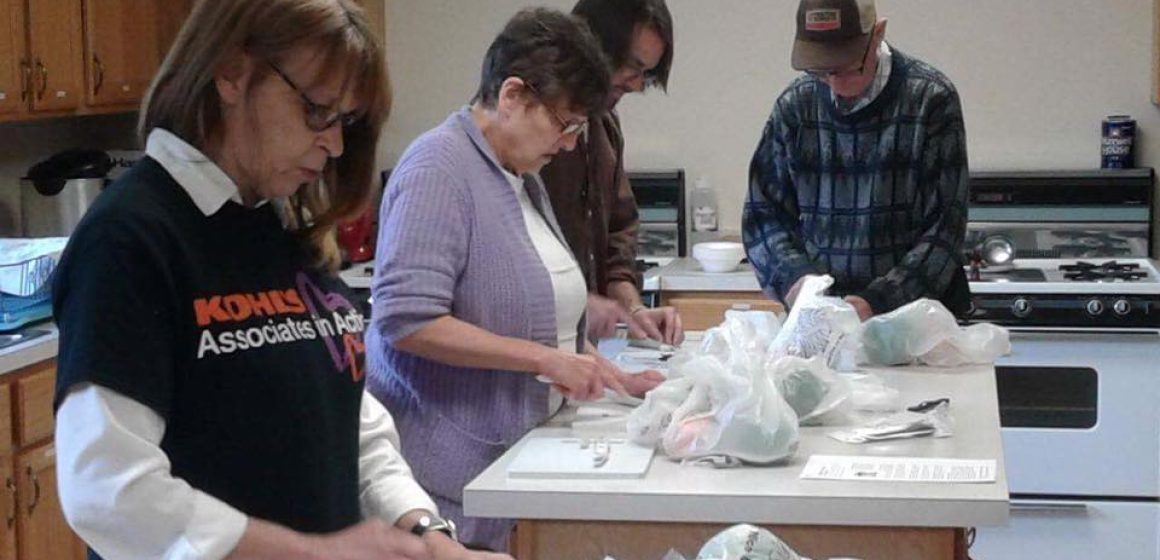
Not a single paid staff member. No salaries. No payroll budget. Just neighbors helping neighbors because the mission matters. In an era of rapidly increasing hunger numbers, volunteer-run hunger relief stretches every donated dollar to its maximum impact.
But it also stretches our people.
We must work that much harder to make our “hunger-relief machine” run effectively. Our pursuits of grant funding and community donations must compete that much harder against big-city programs that often receive support just for existing.
Here’s how we get it right.
The Immense Power of All-Volunteer Operations at a Local Food Pantry
Running a food pantry that serves nearly 30,000 individuals annually is no small feat. And we do it without the administrative and staffing costs that often eat up nonprofit budgets elsewhere.
That means:
- More food in the hands of families in need.
- Higher grant impact potential (every funder knows their support is going directly to service delivery).
- Minimal overhead.
- Maximum efficiency.
It’s why our most loyal donors trust us – some of them choosing to give generously year after year. It’s why civic groups and grantmakers continue to step forward. It’s how we can devote our time and efforts to resolving community issues that cause food insecurity — not just managing it.
But fundraising is an everyday battle. Even OFP’s $1 Million Fundraising Campaign – now over halfway to our goal – will offer a finite amount of impact in the grand scheme of serving three rural counties at the northern tip of impoverished Appalachia.
So we rely on sweat equity. Volunteer-run hunger relief asks a lot of community members, many of whom have nothing more to give than their time. Retirees, local professionals, students, churches, business owners and even former clients now give back.
We have volunteers who stock shelves with arthritis in their hands, who shovel snow so elders can reach the pantry, who learn client-tracking software or haul thousands of pounds of canned goods — all because they care.
This is community-led hunger relief. And it works.
Volunteer-Run Hunger Relief Doesn’t Mean Easy
While our model allows for deep impact, it comes with a heavy load — especially as demand grows.
In just two weeks last fall, we saw a 79% spike in families visiting the pantry. The cause? Federal government shutdowns and SNAP benefit disruptions left many people with nowhere else to turn.
We answered the call as we always do – with great community support. But with no paid staff and a vast rural region to serve, that’s not always so easily sustainable.
Our volunteers do extraordinary work, but they’re also human. They get sick. They burn out. They move away. In our region, 1 in 4 residents faces food insecurity. As OFP Board member Jamie Kohn lamented in a recent op-ed to the local media, “Hunger in our community is the worst I’ve ever seen.”
That said, we simply can’t afford gaps in our community food-distribution services.
That’s why investing in our long-term organizational viability is so crucial — through partnerships, grants, infrastructure projects, and energy efficiency upgrades like our proposed solar panel installation.
Supporting Local Food Equity in Underserved Areas
Western New York is easily one of the most beautiful regions in the U.S., but it’s also overburdened. Our Appalachian hills are home to shrinking towns, aging infrastructure and many who fall through the cracks.
Far too many go to bed on an empty stomach, and we’ve often asked ourselves, “How can we get people to care more about the immense struggle in our communities?”
(Related reading: When Will Food Insecurity in Rural Western New York Be a Priority?)
We throw around the term “food equity” a lot. In this region, food equity doesn’t just mean handing out canned goods. It means reaching people who live up to 15 miles from the nearest grocery store via unpaved backroads. It means welcoming families from diverse backgrounds and helping them choose culturally familiar, healthy foods. It means bringing nutrition directly to schools, seniors and isolated communities through partnerships and mobile outreach.
Volunteer-run hunger relief is the heartbeat of all this work. But we need you to keep that heart beating. Your support builds the scaffolding for long-term food equity in Western New York.
Why We Keep Showing Up: Food Access is a Human Right
No one should go hungry because they live off the beaten path, because they lost their job, or because they’re caught in the cracks of a broken system. Hunger relief rooted in dignity, compassion and community is the strongest tool we have.
Our all-volunteer team isn’t just stretching every dollar. We’re fighting every day to ensure every dollar counts — now and for the future. Want to make a difference? Make a tax-deductible donation, volunteer or help us share this message.
Because when neighbors care for neighbors, no one goes hungry.


